

PRP VS Knee Replacement Which Is Better For You ?
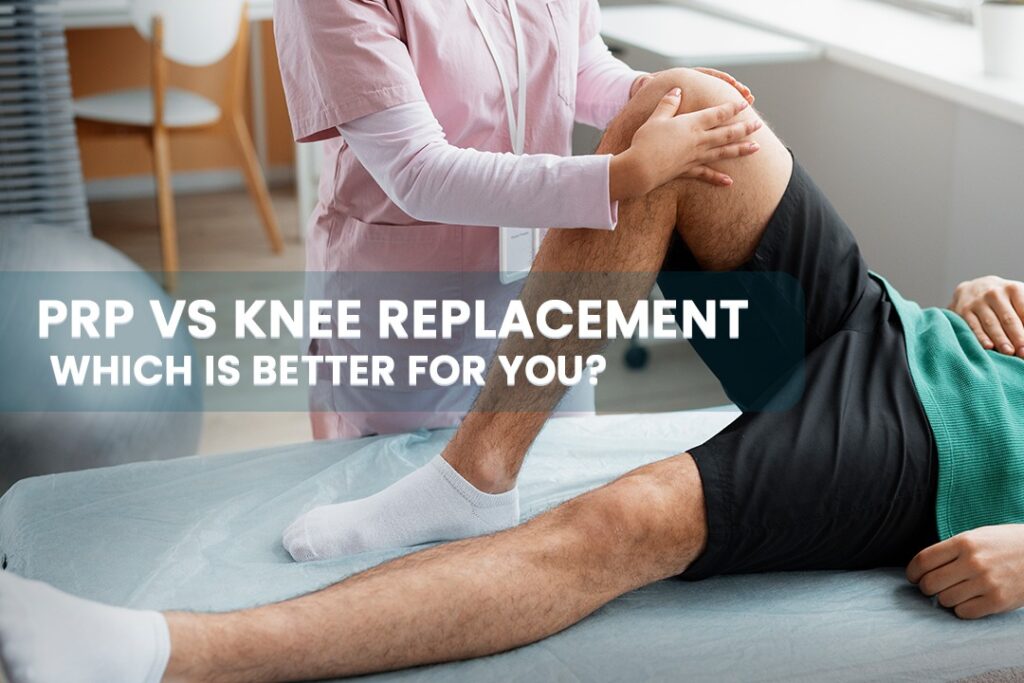
Facebook Twitter Youtube Instagram Knee pain is a common problem that can affect people of all age groups. It can limit your daily activities, reduce mobility, and impact your overall quality of life. With medical advancements, patients today have both non-surgical and surgical treatment options, including PRP therapy and knee replacement surgery. Choosing the right treatment depends on the severity of the condition, lifestyle, and long-term goals. Understanding both options can help you make an informed decision. Understanding PRP Therapy PRP (Platelet-Rich Plasma) therapy is a modern, non-surgical treatment that uses the patient’s own blood to support healing. In this procedure, blood is processed to concentrate platelets, which are rich in growth factors. These are then injected into the knee joint to promote tissue repair, reduce inflammation, and improve joint function. 👉 Want to understand PRP in detail? Read our complete guide on PRP for Knee Osteoarthritis: Benefits, Procedure & Recovery Understanding Knee Replacement Surgery Knee replacement surgery is a procedure where the damaged knee joint is replaced with an artificial implant. It is usually recommended when the joint is severely damaged and other treatments are no longer effective. This surgery helps reduce pain and restore movement but involves a longer recovery period. PRP vs Knee Replacement: Key Differences Feature PRP Therapy Knee Replacement Type Non-surgical Surgical Procedure Time Short Longer Recovery Quick recovery Several months Risk Minimal Moderate Best For Early to moderate damage Severe joint damage Benefits of PRP Therapy PRP therapy is gaining popularity as an effective non-surgical option for knee pain. ✔ Uses natural healing from your own body ✔ Minimally invasive procedure ✔ Faster recovery time ✔ Helps delay or avoid surgery ✔ Improves joint mobility This makes PRP a suitable choice for patients looking for pain relief without surgery. Benefits of Knee Replacement Surgery Knee replacement is beneficial in advanced cases where joint damage is severe. ✔ Provides long-term relief from chronic pain ✔ Corrects joint deformity ✔ Improves movement in severe arthritis ✔ Suitable for advanced bone damage Which Treatment is Right for You? 👉 PRP Therapy May Be Right If: You have early or moderate osteoarthritis You want to avoid surgery You are active and prefer faster recovery You have ligament or cartilage damage 👉 Knee Replacement May Be Needed If: You have severe arthritis Pain is constant and affects daily life Other treatments are not effective Joint damage is advanced Recovery Comparison PRP Therapy Mild discomfort for a short duration Resume daily activities quickly Gradual improvement over a few weeks Knee Replacement Surgery Requires hospital stay Physiotherapy is necessary Full recovery may take several months When Should You Consult a Doctor? You should seek medical advice if you experience: Persistent knee pain Swelling or stiffness Difficulty walking Reduced joint movement Early diagnosis helps prevent further damage and improves treatment outcomes. Expert Care at MJ Naidu Hospital At MJ Naidu Super Specialty Hospital, we provide advanced orthopedic care with a focus on both non-surgical and surgical treatments. Our specialists carefully assess your condition and recommend the most suitable option to help you regain mobility and live pain-free. Final Thoughts Both PRP therapy and knee replacement surgery have their own advantages. PRP offers a natural and non-invasive approach, while knee replacement is effective for severe joint damage. The best treatment depends on your condition, lifestyle, and medical evaluation. Consulting an experienced orthopedic specialist is the first step toward choosing the right solution. Enquire now Table of Contents What is Knee Osteoarthritis? What is PRP for Knee Osteoarthritis? How PRP Helps in Knee Cartilage Damage Benefits of PRP for Knee Osteoarthritis PRP Procedure: Step-by-Step Recovery After PRP Injection Who is Eligible for PRP Injection? PRP Injection vs Conventional Treatments Is PRP Injection Safe? MJNaidu hospital latest Updates delivered straight to your inbox Follow Us You have been successfully Subscribed! Ops! Something went wrong, please try again.
Is Running Good For Your Knees ?

Facebook Twitter Youtube Instagram Running is one of the simplest and most effective ways to stay active. From improving fitness to relieving stress, it offers multiple health benefits. However, many people hesitate before starting or continuing running because of one concern: Is running safe for your knees? Some believe running damages joints, while others say it strengthens them. The truth lies somewhere in between. Your experience with running depends on: How you run How much you run The current condition of your joints How Running Impacts Your Knee Joints Your knees are designed to handle movement and absorb shock. When you run, they experience repeated loading with each step. This impact is not always harmful: Controlled and moderate stress can help strengthen bones It supports overall joint function Excessive or improper running can lead to strain and discomfort Understanding this balance is key to protecting your knees. Benefits of Running for Overall Health When done correctly, running can positively impact both your body and mind: Improves brain function and focus Reduces stress and enhances mood Boosts blood circulation and heart health Strengthens bones through weight-bearing activity Regular running also helps maintain mobility and improves endurance over time. What Happens to Knee Cartilage During Running? Knee cartilage plays a crucial role in absorbing shock and allowing smooth joint movement. During running: The cartilage experiences repetitive compression and release (cyclical loading) This process supports joint nourishment and function After intense activity, the cartilage may temporarily compress Recovery is essential: The body needs time to restore normal joint function Lack of rest can increase stress on the knees Continuous overload may lead to discomfort or long-term damage When Running Can Become Harmful Running can negatively affect your knees if precautions are ignored. You may be at risk if: You increase intensity too quickly You skip rest and recovery You continue running despite pain You use improper footwear Your running form is incorrect Over time, these factors can lead to knee strain or injury. Signs You Should Not Ignore Your body always gives warning signals. Pay attention to them. Stop running and consult a doctor if you notice: Persistent or recurring knee pain Swelling or stiffness around the joint Difficulty walking, bending, or climbing stairs Pain that gradually worsens Continuing to run despite these symptoms can worsen the condition. Expert Tips for Safe Running To enjoy the benefits of running without harming your knees: Start slowly and increase intensity gradually Always warm up before running Use good quality, supportive footwear Prefer softer surfaces like tracks or grass Include strength training for leg muscles Take adequate rest between sessions Beginner tip: Start with walking and gradually transition into jogging. Running vs Walking: Which Is Better for Knee Health? Both activities play an important role in a healthy routine: Walking: Low-impact, safest for joints, ideal for beginners and people with knee pain Running: Higher impact, better for fitness, suitable for individuals with strong joints If your priority is joint safety, walking is the better option. If your joints are healthy, running can be included in moderation. Final Verdict Running can support knee health when done correctly Overtraining or ignoring discomfort can lead to joint issues The key is balance: Stay active Avoid overloading your joints Listen to your body Conclusion So, is running good for your knees? Yes—if you approach it the right way. Running can improve your overall health, strengthen your body, and enhance your lifestyle. However, pushing beyond your limits or ignoring early warning signs can lead to problems. The goal is not just fitness, but long-term joint health and pain-free movement. Enquire now Table of Contents What is Knee Osteoarthritis? What is PRP for Knee Osteoarthritis? How PRP Helps in Knee Cartilage Damage Benefits of PRP for Knee Osteoarthritis PRP Procedure: Step-by-Step Recovery After PRP Injection Who is Eligible for PRP Injection? PRP Injection vs Conventional Treatments Is PRP Injection Safe? MJNaidu hospital latest Updates delivered straight to your inbox Follow Us You have been successfully Subscribed! Ops! Something went wrong, please try again.
PRP for knee osteoarthritis: benefits, procedure & recovery

Facebook Twitter Youtube Instagram PRP for knee osteoarthritis: benefits, procedure & recovery Knee osteoarthritis is one of the most common causes of chronic knee pain, stiffness, and reduced mobility, especially among adults and elderly individuals. As cartilage gradually wears down, everyday activities such as walking, climbing stairs, or standing for long periods become painful. Today, PRP for Knee Osteoarthritis has emerged as an advanced non-surgical treatment option that helps reduce pain and improve joint function using the body’s natural healing ability. This blog explains how PRP therapy works, its benefits, procedure, recovery timeline, and who is eligible for treatment. What is Knee Osteoarthritis? Knee osteoarthritis occurs when the protective cartilage cushioning the knee joint starts deteriorating over time. Common Causes Age-related wear and tear Previous knee injuries Obesity or excess joint pressure Sports-related strain Joint misalignment When cartilage damage progresses, bones begin to rub against each other, leading to: ✅ Pain ✅ Swelling ✅ Joint stiffness ✅ Reduced flexibility What is PRP for Knee Osteoarthritis? Platelet-Rich Plasma (PRP) therapy is a regenerative treatment prepared using a small sample of the patient’s own blood. The blood is processed to concentrate platelets that contain powerful growth factors responsible for tissue repair and healing. These concentrated platelets are then injected directly into the affected knee joint to promote natural recovery. Unlike painkillers or steroid injections, PRP focuses on healing damaged tissues rather than temporarily masking pain. How PRP Helps in Knee Cartilage Damage One of the major advantages of PRP for Knee Osteoarthritis is its ability to support joint repair. PRP helps by: Stimulating cartilage healing Reducing joint inflammation Improving lubrication inside the joint Slowing osteoarthritis progression Enhancing mobility and flexibility This makes PRP an effective solution for patients looking for pain relief without surgery. Benefits of PRP for Knee Osteoarthritis ✅ Natural Healing Treatment Use your own blood components, minimizing allergy risks. ✅ Non-Surgical Pain Relief Helps reduce knee pain without joint replacement surgery. ✅ Faster Recovery Minimal downtime compared to surgical procedures. ✅ Improved Joint Movement Patients often experience better flexibility and walking comfort. ✅ Long-Lasting Results Relief may last longer than conventional injections. PRP Procedure: Step-by-Step The PRP procedure is simple and usually completed within 30–45 minutes. Step 1: Blood Collection A small sample of blood is taken from the patient’s arm for the preparation of PRP. Step 2: PRP Preparation The blood is placed in a centrifuge machine to separate platelet-rich plasma. Step 3: Injection into Knee Joint Using sterile techniques and imaging guidance, PRP is injected into the affected knee. PRP treatment for knee osteoarthritis is a safe and simple procedure that uses the patient’s own blood to support joint healing. Recovery After PRP Injection Recovery following PRP treatment is generally smooth. Expected Recovery Timeline First 24–48 Hours Mild soreness or swelling may occur Rest is recommended Week 1–2 Gradual improvement in comfort Light activities allowed 4–6 Weeks Noticeable pain reduction Improved joint mobility Full benefits typically appear within 6–12 weeks as tissue healing progresses. Who is Eligible for PRP Injection? PRP therapy is ideal for patients who: Have early to moderate knee osteoarthritis Experience chronic knee pain Want to avoid or delay knee replacement surgery Have ligament or cartilage damage Do not respond well to medications or physiotherapy alone PRP May Not Be Suitable For: Advanced bone-on-bone arthritis Active infections Certain blood disorders A specialist evaluation helps determine eligibility. PRP Injection vs Conventional Treatments Treatment Purpose Healing Effect Painkillers Temporary relief No tissue repair Steroid Injection Reduce inflammation Short-term relief Surgery Structural correction Longer recovery PRP Injection Natural healing Supports cartilage repair Is PRP Injection Safe? Since PRP uses the patient’s own blood, the risk of rejection or allergic reaction is extremely low. When performed by trained orthopedic specialists, PRP therapy is considered safe and effective. PRP Injection for Knee Osteoarthritis offers a promising solution for individuals suffering from knee cartilage damage and chronic joint pain. By promoting natural healing and reducing inflammation, PRP therapy provides effective pain relief without surgery while improving overall joint function. Early treatment can slow disease progression and help patients maintain an active lifestyle without invasive procedures. If you are experiencing persistent knee pain or mobility issues, consulting an orthopedic specialist can help determine whether PRP therapy is the right treatment option for you. Enquire now Table of Contents What is Knee Osteoarthritis? What is PRP for Knee Osteoarthritis? How PRP Helps in Knee Cartilage Damage Benefits of PRP for Knee Osteoarthritis PRP Procedure: Step-by-Step Recovery After PRP Injection Who is Eligible for PRP Injection? PRP Injection vs Conventional Treatments Is PRP Injection Safe? MJNaidu hospital latest Updates delivered straight to your inbox Follow Us You have been successfully Subscribed! Ops! Something went wrong, please try again.
Summer Skin Care in India: Complete Guide for Healthy Skin in Hot Weather

What Is Uric Acid and Why Should You Take It Seriously?
Pickleball Injuries: Causes, Symptoms, Treatment, and Prevention

What Is Uric Acid and Why Should You Take It Seriously?