
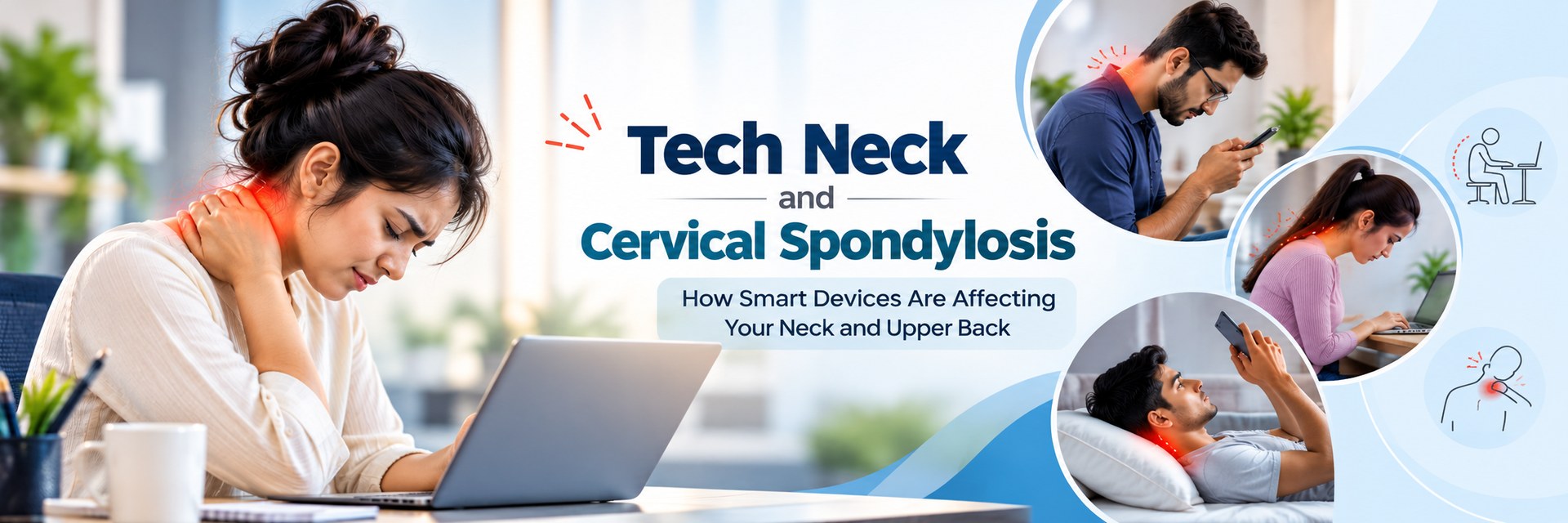
Tech Neck and Cervical Spondylosis: How Smart Devices Are Affecting Your Neck and Upper Back
In today’s digital era, smartphones, laptops, and tablets have become essential parts of our personal and professional lives. While these devices keep us connected and productive, prolonged use comes with an unintended health side effect: persistent neck and upper back pain.
Medical professionals increasingly refer to this condition as “Tech Neck” (or “Text Neck”) — a term describing strain and stress injuries caused by repeatedly looking down at screens for extended periods. When left unmanaged, constant posture strain can accelerate wear and tear on the cervical spine, leading to chronic conditions like cervical spondylosis.
At MJ Naidu Super Speciality Hospital, Vijayawada, we frequently evaluate patients experiencing severe neck stiffness, shoulder pain, and headaches related to daily device use. Understanding how tech neck impacts your spine is the first step toward preventing long-term damage.
The Hidden Weight of Tech Neck
An adult head weighs approximately 4.5 to 5.5 kilograms in a neutral, upright position. However, tilting your head forward to look down at a smartphone or tablet dramatically increases the effective load on your cervical spine:
- 15° tilt: Adds about 12 kg of pressure to the neck.
- 30° tilt: Increases force to roughly 18 kg.
- 40° to 60° tilt: Forces the cervical spine to support up to 27 kg of pressure — equivalent to carrying an eight-year-old child around your neck!
In short: the lower you look, the heavier your head becomes for your neck — and that extra load is carried by muscles, tendons, and ligaments, not by the screen.
Holding your head in this forward position for hours every day forces your neck muscles, tendons, and ligaments to work overtime. This causes muscle fatigue, painful spasms, and localized inflammation.
From Strain to Cervical Spondylosis
While tech neck often begins as a temporary muscle strain, chronic poor posture can lead to structural changes over time. Continuous stress on the cervical spine accelerates age-related wear and tear, contributing to cervical spondylosis — an umbrella term for neck osteoarthritis affecting the spinal discs and joints.
Signs You May Be Developing Cervical Spondylosis
Watch for these symptoms, especially if they build up over weeks:
- Persistent stiffness or a dull aching pain in the back of the neck.
- Sharp pain radiating across the shoulders, upper back, or down the arms.
- Recurring pressure headaches that originate behind your neck and lower head.
- Spreading tingling, diminished sensation, or mild muscle weakness in the palms and fingers.
- Grinding or popping sensations (crepitus) when turning your neck.
Simple Ways to Prevent and Relieve Tech Neck
Small daily adjustments can significantly reduce pressure on your cervical spine and lower your risk of chronic neck issues:
- Raise Your Screen: Adjust your computer monitor or hold your smartphone higher so your head remains in a neutral, upright position (eye level).
- Follow the 20-20-20 Rule: Every 20 minutes, take a 20-second break and look at something 20 feet away to relax your eyes and posture muscles.
- Incorporate Desk Stretches: Gently tilt your ear toward your shoulder and hold for 15 seconds, or do gentle chin tucks to relieve neck tension throughout the workday.
- Optimize Your Workspace: Use a supportive chair with proper lumbar support, keep your feet flat on the floor, and position your keyboard so your shoulders stay relaxed.
Expert Care at MJ Naidu Super Speciality Hospital
The majority of people struggling with device-related neck strain and spinal wear respond remarkably well to non-invasive therapies, tailored rehabilitation exercises, medication, and workspace posture modifications.
At MJ Naidu Super Speciality Hospital, we provide comprehensive evaluations to identify the exact cause of your neck discomfort and develop a personalized plan to restore your mobility. If you are also dealing with lower back strain, read our guide to spine health and back pain.
To ensure your recovery is on the right track, book a consultation with our orthopaedic and spine specialists using the appointment option below.
Table of Contents
Neck pain for over two weeks?
Our orthopaedic and spine specialists can find the cause and help you move comfortably again.
Take the First Step Toward a Pain-Free Life
📍 Location: MJ Naidu Super Speciality Hospital, Vijayawada
📞 Book an Appointment: Call 96401 33302 to schedule your consultation with our orthopaedic and spine specialists.
Medical Disclaimer: This blog post is intended for general informational purposes only and does not substitute for professional medical advice, diagnosis, or treatment.