

Advanced Augmented Reality(AR) in Knee Replacement for Grade 4 Osteoarthritis
Grade 4 osteoarthritis is the most severe stage of knee arthritis, where the cushioning cartilage inside the joint becomes heavily damaged. As the condition progresses, patients often experience constant pain, stiffness, swelling, and difficulty performing everyday activities.
With recent developments in orthopedic care, advanced technologies such as Augmented Reality (AR)-assisted knee replacement surgery are helping surgeons improve precision and overall treatment outcomes.
What is Grade 4 Osteoarthritis?
In Grade 4 osteoarthritis, the knee joint experiences advanced wear and tear. The protective cartilage that allows smooth joint movement becomes extremely thin or completely damaged.
This can result in:
- Bone friction inside the joint
- Severe inflammation
- Reduced flexibility
- Difficulty walking or standing for long periods
Common Symptoms
✔ Continuous knee pain
✔ Joint stiffness
✔ Swelling around the knee
✔ Reduced mobility
✔ Cracking or grinding sensation during movement
At this stage, patients may not receive enough relief from medications, injections, or physiotherapy alone.
Why Knee Replacement is Recommended
In Grade 4 osteoarthritis, non-surgical treatments may provide only temporary relief. When the joint damage is severe, knee replacement surgery becomes the most effective solution.
The damaged joint is replaced with an artificial implant to restore movement and reduce pain.
What is Augmented Reality in Orthopedic Surgery?
Augmented Reality (AR) technology adds digital guidance during surgery to help surgeons visualize the knee joint more accurately.
Using advanced imaging and tracking systems, AR provides:
- Real-time surgical guidance
- 3D visualization of the knee anatomy
- Improved implant positioning assistance
- Better alignment monitoring during surgery
This technology helps surgeons make more accurate decisions throughout the procedure.
How AR Technology Improves Knee Replacement
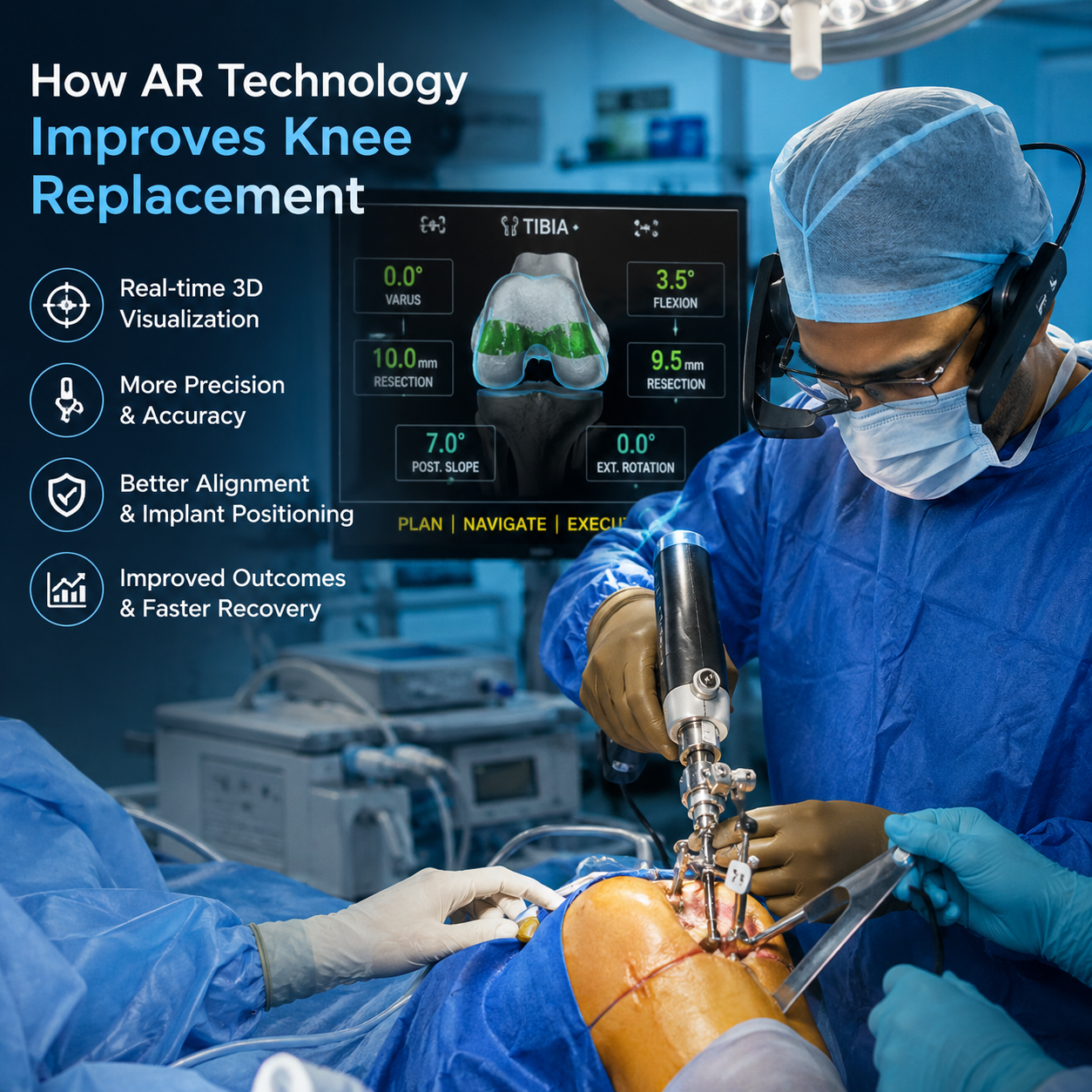
AR-assisted knee replacement enhances surgical precision in several ways.
✔ Better Implant Positioning
Accurate placement of implants improves joint function and stability.
✔ Improved Joint Alignment
AR systems help surgeons maintain proper alignment during surgery, which is important for long-term mobility.
✔ More Personalized Surgery
Each patient’s knee structure is different. AR technology allows procedures to be customized according to individual anatomy.
✔ Enhanced Surgical Accuracy
Real-time digital guidance helps improve precision during critical surgical steps.
✔ Support for Faster Recovery
Better surgical accuracy may help patients experience smoother rehabilitation and improved mobility after surgery.
Comparison: AR-Assisted Surgery vs Robotic Knee Replacement
Both technologies aim to improve knee replacement outcomes, but they work differently.
Feature | AR-Assisted Surgery | Robotic-Assisted Surgery |
Main Focus | Real-time visualization | Mechanical precision support |
Guidance Method | Digital overlays and tracking | Robotic arm assistance |
Customization | Personalized visual planning | Pre-programmed alignment support |
Surgeon Control | Fully surgeon-controlled | Surgeon-guided robotic assistance |
Goal | Improved surgical visualization | Increased cutting precision |
Benefits for Grade 4 Osteoarthritis Patients
For patients with severe joint damage, AR technology provides:
- More accurate surgery
- Better implant positioning
- Reduced complications
- Improved mobility after surgery
- Long-lasting results
Advanced technology can help improve confidence and overall recovery outcomes for patients undergoing knee replacement surgery.
Recovery After AR-Assisted Knee Replacement
Recovery depends on the patient’s overall health and rehabilitation program.
Early Recovery
- Walking support may begin within days
- Pain management and physiotherapy are initiated early
Rehabilitation Phase
- Strengthening exercises improve mobility
- Gradual return to normal activities
- Continued physiotherapy enhances joint flexibility
Many patients experience improved comfort and movement over time with proper rehabilitation.
Why Choose Advanced Technology for Treatment?
Modern technologies like AR are designed to:
- Enhance surgical accuracy
- Improve patient safety
- Deliver better long-term results
Choosing a hospital that uses advanced techniques ensures better care and outcomes.
When Should You Consult a Doctor?
You should seek medical advice if you experience:
- Severe knee pain
- Difficulty walking
- Joint stiffness
- Reduced knee movement
- Pain affecting daily activities
Early consultation helps in choosing the right treatment at the right time.
Final Thoughts
Grade 4 osteoarthritis can significantly impact mobility and quality of life. Advanced technologies like Augmented Reality-assisted knee replacement surgery are helping improve precision, implant alignment, and overall patient outcomes.
As orthopedic care continues to evolve, AR-assisted surgery represents an important advancement in delivering more accurate and personalized treatment for severe knee arthritis.
Table of Contents
- What is Knee Osteoarthritis?
- What is PRP for Knee Osteoarthritis?
- How PRP Helps in Knee Cartilage Damage
- Benefits of PRP for Knee Osteoarthritis
- PRP Procedure: Step-by-Step
- Recovery After PRP Injection
- Who is Eligible for PRP Injection?
- PRP Injection vs Conventional Treatments
- Is PRP Injection Safe?