

PRP for knee osteoarthritis: benefits, procedure & recovery
Knee osteoarthritis is one of the most common causes of chronic knee pain, stiffness, and reduced mobility, especially among adults and elderly individuals. As cartilage gradually wears down, everyday activities such as walking, climbing stairs, or standing for long periods become painful.
Today, PRP for Knee Osteoarthritis has emerged as an advanced non-surgical treatment option that helps reduce pain and improve joint function using the body’s natural healing ability.
This blog explains how PRP therapy works, its benefits, procedure, recovery timeline, and who is eligible for treatment.
What is Knee Osteoarthritis?
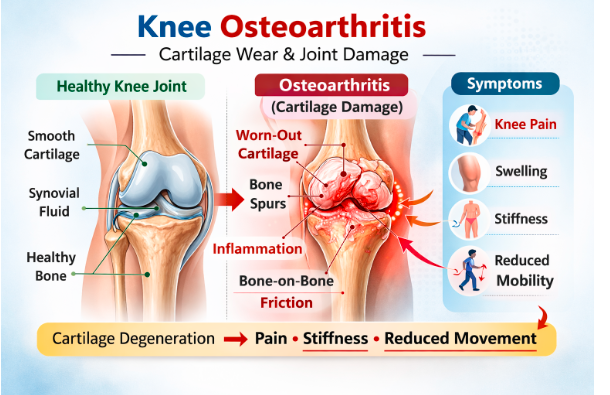
Knee osteoarthritis occurs when the protective cartilage cushioning the knee joint starts deteriorating over time.
Common Causes
- Age-related wear and tear
- Previous knee injuries
- Obesity or excess joint pressure
- Sports-related strain
- Joint misalignment
When cartilage damage progresses, bones begin to rub against each other, leading to:
✅ Pain
✅ Swelling
✅ Joint stiffness
✅ Reduced flexibility
What is PRP for Knee Osteoarthritis?
Platelet-Rich Plasma (PRP) therapy is a regenerative treatment prepared using a small sample of the patient’s own blood.
The blood is processed to concentrate platelets that contain powerful growth factors responsible for tissue repair and healing.
These concentrated platelets are then injected directly into the affected knee joint to promote natural recovery.
Unlike painkillers or steroid injections, PRP focuses on healing damaged tissues rather than temporarily masking pain.
How PRP Helps in Knee Cartilage Damage
One of the major advantages of PRP for Knee Osteoarthritis is its ability to support joint repair.
PRP helps by:
- Stimulating cartilage healing
- Reducing joint inflammation
- Improving lubrication inside the joint
- Slowing osteoarthritis progression
- Enhancing mobility and flexibility
This makes PRP an effective solution for patients looking for pain relief without surgery.
Benefits of PRP for Knee Osteoarthritis
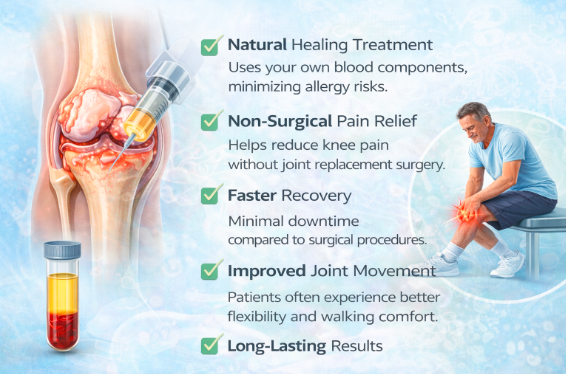
✅ Natural Healing Treatment
Use your own blood components, minimizing allergy risks.
✅ Non-Surgical Pain Relief
Helps reduce knee pain without joint replacement surgery.
✅ Faster Recovery
Minimal downtime compared to surgical procedures.
✅ Improved Joint Movement
Patients often experience better flexibility and walking comfort.
✅ Long-Lasting Results
Relief may last longer than conventional injections.
PRP Procedure: Step-by-Step
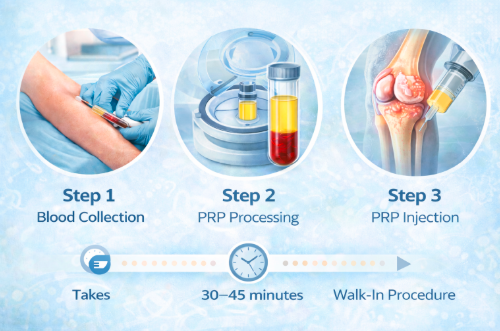
The PRP procedure is simple and usually completed within 30–45 minutes.
Step 1: Blood Collection
A small sample of blood is taken from the patient’s arm for the preparation of PRP.
Step 2: PRP Preparation
The blood is placed in a centrifuge machine to separate platelet-rich plasma.
Step 3: Injection into Knee Joint
Using sterile techniques and imaging guidance, PRP is injected into the affected knee.
PRP treatment for knee osteoarthritis is a safe and simple procedure that uses the patient’s own blood to support joint healing.
Recovery After PRP Injection
Recovery following PRP treatment is generally smooth.
Expected Recovery Timeline
First 24–48 Hours
- Mild soreness or swelling may occur
- Rest is recommended
Week 1–2
- Gradual improvement in comfort
- Light activities allowed
4–6 Weeks
- Noticeable pain reduction
- Improved joint mobility
Full benefits typically appear within 6–12 weeks as tissue healing progresses.
Who is Eligible for PRP Injection?
PRP therapy is ideal for patients who:
- Have early to moderate knee osteoarthritis
- Experience chronic knee pain
- Want to avoid or delay knee replacement surgery
- Have ligament or cartilage damage
- Do not respond well to medications or physiotherapy alone
PRP May Not Be Suitable For:
- Advanced bone-on-bone arthritis
- Active infections
- Certain blood disorders
A specialist evaluation helps determine eligibility.
PRP Injection vs Conventional Treatments
Treatment | Purpose | Healing Effect |
Painkillers | Temporary relief | No tissue repair |
Steroid Injection | Reduce inflammation | Short-term relief |
Surgery | Structural correction | Longer recovery |
PRP Injection | Natural healing | Supports cartilage repair |
Is PRP Injection Safe?
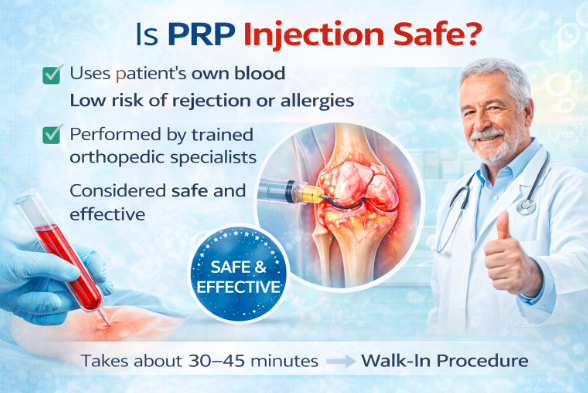
Since PRP uses the patient’s own blood, the risk of rejection or allergic reaction is extremely low. When performed by trained orthopedic specialists, PRP therapy is considered safe and effective.
PRP Injection for Knee Osteoarthritis offers a promising solution for individuals suffering from knee cartilage damage and chronic joint pain. By promoting natural healing and reducing inflammation, PRP therapy provides effective pain relief without surgery while improving overall joint function.
Early treatment can slow disease progression and help patients maintain an active lifestyle without invasive procedures.
If you are experiencing persistent knee pain or mobility issues, consulting an orthopedic specialist can help determine whether PRP therapy is the right treatment option for you.
Table of Contents
- What is Knee Osteoarthritis?
- What is PRP for Knee Osteoarthritis?
- How PRP Helps in Knee Cartilage Damage
- Benefits of PRP for Knee Osteoarthritis
- PRP Procedure: Step-by-Step
- Recovery After PRP Injection
- Who is Eligible for PRP Injection?
- PRP Injection vs Conventional Treatments
- Is PRP Injection Safe?