


Summer Skin Care in India: Complete Guide for Healthy Skin in Hot Weather
Indian summers are intense. Rising temperatures, high humidity, and strong UV rays can affect your skin in multiple ways. From tanning and pigmentation to acne breakouts and heat rashes, summer brings specific challenges that require a proper skincare routine.
This detailed guide will help you understand summer skin care in India and how to protect your skin effectively during extreme heat.
Why Summer Is Harsh on Indian Skin

During summer:
- UV radiation increases melanin production, causing tanning and pigmentation.
- Sweat and oil clog pores, leading to acne.
- Heat causes dehydration, making skin dull and irritated.
- Humidity encourages fungal and bacterial infections.
Indian skin types often have higher melanin levels, which provide some natural sun protection but also make pigmentation more noticeable when exposed to strong sunlight.
Common Summer Skin Problems in India
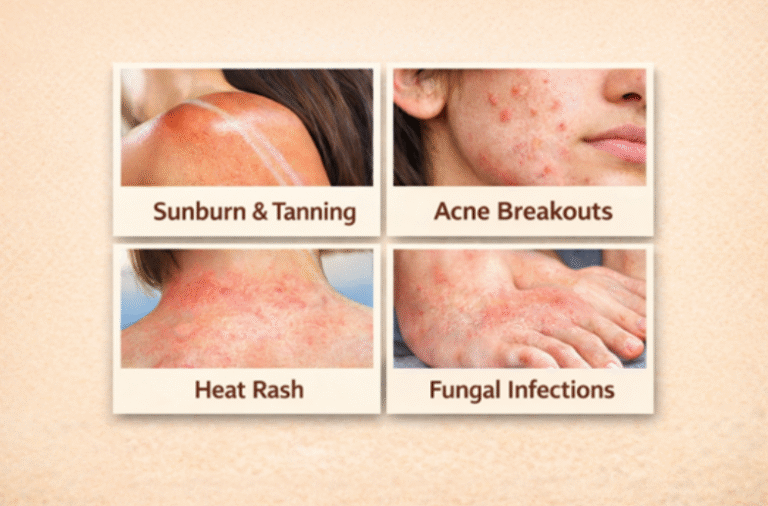
1. Sunburn and Tanning
Prolonged sun exposure damages the outer layer of the skin, causing redness, irritation, and darkening.
2. Acne Breakouts
Excess oil production during hot weather blocks pores, leading to pimples and inflammation.
3. Heat Rash (Prickly Heat)
Heat rash appears as small red itchy bumps caused by excessive sweating and blocked sweat glands.
4. Pigmentation and Dark Spots
Continuous UV exposure increases uneven skin tone.
5. Fungal Infections
Sweaty areas like underarms, neck folds, and feet are prone to fungal growth.
Dermatologist-Recommended Summer Skin Care Routine in India
Following a simple and consistent routine can prevent most summer skin issues.
Morning Routine
- Use a gentle, sulfate-free cleanser.
- Use a light, non-greasy moisturizer that matches your skin type.
- Use broad-spectrum sunscreen (SPF 30 or higher).
- Reapply sunscreen every 2–3 hours if outdoors.
Night Routine
- Wash your face to remove sweat and pollution.
- Apply prescribed treatments for acne or pigmentation if needed.
- Use a light, non-greasy moisturizer.
How to Choose the Right Sunscreen in Indian Summer
When selecting sunscreen:
- Choose SPF 30 or SPF 50 for outdoor use.
- Look for PA+++ or higher for UVA protection.
- Pick gel-based formulas for oily skin.
- Choose cream-based sunscreen for dry skin.
Applying enough sunscreen is important. Most adults need about two finger-lengths of sunscreen for the face and neck.
Hydration: The Most Underrated Step
Internal hydration plays an important role in maintaining healthy skin. Drink at least 2.5 to 3 liters of water daily and include water-rich seasonal fruits such as watermelon, cucumber, and oranges to support optimal skin hydration.
What to Avoid During Summer
- Avoid applying lemon or toothpaste on acne.
- Do not over-wash your face.
- Avoid heavy oil-based creams.
- Do not ignore persistent rashes or itching.
Self-treatment without proper diagnosis can worsen skin problems.
When to Consult a Dermatologist
You should consult a dermatologist if you experience any of these skin concerns:
- Severe sunburn
- Painful or cystic acne
- Persistent pigmentation
- Recurrent fungal infections
- Allergic reactions after sun exposure
Early treatment prevents long-term skin damage.
Best Summer Skin Care Tips for Indian Weather
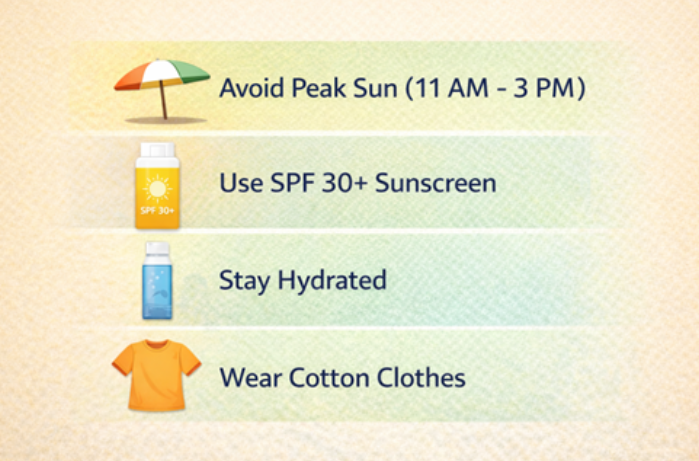
Here are quick and effective tips:
- Wear cotton clothes.
- Use an umbrella or cap outdoors.
- Minimize outdoor activities between 11 AM and 3 PM when UV radiation levels are highest.
- Shower after excessive sweating.
- Change sweaty clothes immediately.
Small lifestyle adjustments can significantly improve your skin health.
Healthy Skin Starts with the Right Care
Summer skin care in India requires awareness, consistency, and the right products. The harsh climate makes it essential to follow a dermatologist-approved routine tailored to Indian weather conditions.
By protecting your skin from UV rays, staying hydrated, and avoiding harmful home remedies, you can maintain healthy, glowing skin throughout the summer season.
If you notice unusual symptoms, consult a qualified dermatologist for professional guidance and treatment.