

ACL Injury: Symptoms, Causes, Treatment & Recovery Guide
Obesity is often associated with conditions such as diabetes, high blood pressure, and heart diseas
ACL (Anterior Cruciate Ligament) injuries are among the most common knee injuries, especially in athletes and physically active individuals. Whether you enjoy football, cricket, badminton, basketball, or recreational fitness activities, an ACL injury can significantly affect your mobility and daily life.
An ACL tear can happen suddenly during sports or routine activities involving twisting, jumping, or sudden changes in direction. Early diagnosis and appropriate treatment are essential for restoring knee stability and preventing long-term complications.
This guide explains the symptoms, causes, treatment options, and recovery process for ACL injuries.
What Is an ACL Injury?
The Anterior Cruciate Ligament (ACL) is one of the key ligaments that supports and stabilizes the knee joint. It connects the thigh bone to the shin bone and helps the knee move safely during activities like walking, running, jumping, and turning. When the ACL is stretched or torn, the knee can become unstable, making everyday movements and sports activities difficult.
An ACL injury occurs when this ligament is stretched or torn due to excessive force or sudden movement.
ACL injuries are classified into three grades: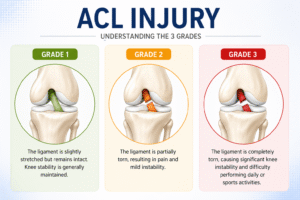
Grade 1
The ligament is slightly stretched but remains intact. Knee stability is generally maintained.
Grade 2
The ligament is partially torn, resulting in pain and mild instability.
Grade 3
The ligament is completely torn, causing significant knee instability and difficulty performing daily or sports activities.
What Causes an ACL Injury?
ACL injuries usually occur without direct contact. The most common causes include:
Sudden twisting or pivoting movements
Landing awkwardly after a jump
Sudden stops while running
Changing direction quickly
Direct impact to the knee during sports
Weak muscles around the knee
Poor landing technique
Sports commonly associated with ACL injuries include football, basketball, volleyball, badminton, kabaddi, and skiing.
Common Symptoms of an ACL Injury
Symptoms usually appear immediately after the injury.
Common warning signs include:
A loud “pop” sound at the time of injury
Sudden and severe knee pain
Rapid swelling within a few hours
Difficulty bearing weight
Knee instability or “giving way”
Limited range of motion
Difficulty walking
If these symptoms occur, consult an orthopedic specialist as soon as possible.
Who Is at Higher Risk?
Although anyone can experience an ACL injury, the risk is higher among:
Athletes involved in jumping or pivoting sports
Individuals with previous knee injuries
People returning to sports after a long break
Those with poor muscle strength or balance
Women athletes, due to anatomical and hormonal differences
How Is an ACL Injury Diagnosed?
Early diagnosis of an ACL injury allows orthopedic specialists to assess the severity of the damage and recommend the most suitable treatment for recovery.
An orthopedic specialist may recommend:
Physical Examination
The doctor checks knee stability, swelling, and range of motion.
MRI Scan
MRI provides detailed images of the ACL and other soft tissues, helping confirm partial or complete tears.
X-rays
Although X-rays do not show ligaments, they help rule out fractures or associated bone injuries.
Treatment Options for ACL Injuries
Treatment depends on the severity of the injury, activity level, and individual goals.
Non-Surgical Treatment
Non-surgical management may be suitable for patients with minor or partial ACL injuries.
It may include:
Rest and activity modification
Ice therapy
Compression and elevation
Knee braces
Physiotherapy
Strengthening exercises
Rehabilitation focuses on restoring knee strength, stability, and function.
Treatment Options for ACL Injuries
Treatment depends on the severity of the injury, activity level, and individual goals.
Non-Surgical Treatment
Non-surgical management may be suitable for patients with minor or partial ACL injuries.
It may include:
Rest and activity modification
Ice therapy
Compression and elevation
Knee braces
Physiotherapy
Strengthening exercises
Rehabilitation focuses on restoring knee strength, stability, and function.
ACL Reconstruction Surgery
Surgery is generally recommended for:
Complete ACL tears
Active individuals wishing to return to sports
Persistent knee instability
Combined ligament or meniscus injuries
During ACL reconstruction, the torn ligament is replaced with a tendon graft to restore knee stability.
ACL Injury Recovery Timeline
Recovery varies depending on the treatment approach and individual healing.
First Few Weeks
Reduce pain and swelling
Restore knee movement
Begin supervised physiotherapy
1–3 Months
Improve muscle strength
Increase balance and flexibility
Resume light daily activities
4–6 Months
Continue advanced rehabilitation
Improve agility and coordination
6–12 Months
Return to sports after medical clearance
Continue strength and conditioning exercises
Following the rehabilitation plan is essential for a successful recovery.
ACL Injury Recovery Timeline
Recovery varies depending on the treatment approach and individual healing.
First Few Weeks
Reduce pain and swelling
Restore knee movement
Begin supervised physiotherapy
1–3 Months
Improve muscle strength
Increase balance and flexibility
Resume light daily activities
4–6 Months
Continue advanced rehabilitation
Improve agility and coordination
6–12 Months
Return to sports after medical clearance
Continue strength and conditioning exercises
Following the rehabilitation plan is essential for a successful recovery.
ACL Injury Recovery Timeline
Recovery varies depending on the treatment approach and individual healing.
First Few Weeks
Reduce pain and swelling
Restore knee movement
Begin supervised physiotherapy
1–3 Months
Improve muscle strength
Increase balance and flexibility
Resume light daily activities
4–6 Months
Continue advanced rehabilitation
Improve agility and coordination
6–12 Months
Return to sports after medical clearance
Continue strength and conditioning exercises
Following the rehabilitation plan is essential for a successful recovery.
Protein supports muscle strength, which helps protect your joints.
Choose:
- Eggs
- Fish
- Lean chicken
- Paneer
- Lentils
- Pulses
When Should You See an Orthopedic Specialist?
Seek medical attention immediately if you experience:
Sudden knee pain after twisting or landing
A popping sensation during injury
Rapid swelling
Knee instability
Difficulty walking
Persistent pain that does not improve
Early diagnosis can prevent further damage to the knee and improve treatment outcomes.
Expert ACL Injury Care at MJ Naidu Hospital
At MJ Naidu Hospital, our orthopedic specialists provide comprehensive evaluation and personalized treatment for ACL injuries. From advanced diagnostic imaging to physiotherapy and surgical management, our team focuses on helping patients recover safely and return to an active lifestyle.
Whether you are a professional athlete or someone with a recent knee injury, we provide evidence-based treatment plans tailored to your individual needs.
Final Thoughts
An ACL injury can significantly affect your mobility, confidence, and quality of life if left untreated. Recognizing the symptoms early, obtaining an accurate diagnosis, and following the appropriate treatment plan are essential for a successful recovery.
With expert orthopedic care, structured rehabilitation, and proper guidance, most patients can regain knee strength, stability, and return to their normal activities.
If you suspect an ACL injury or are experiencing persistent knee pain after a sports injury, consult the orthopedic specialists at MJ Naidu Hospital for timely diagnosis and comprehensive care.
Table of Contents
- ACL Injury: Symptoms, Causes, Treatment & Recovery Guide
- What Is an ACL Injury?
- What Causes an ACL Injury?
- Common Symptoms of an ACL Injury
- Who Is at Higher Risk?
- How Is an ACL Injury Diagnosed?
- Treatment Options for ACL Injuries
- ACL Injury Recovery Timeline
- Can ACL Injuries Be Prevented?
- When Should You See an Orthopedic Specialist?
- Expert ACL Injury Care at MJ Naidu Hospital
- Final Thoughts