

Robotic Physiotherapy: The Future of Recovery and Rehabilitation
Recovery after surgery, injury, or neurological conditions often depends on effective rehabilitation and physiotherapy support. With advancements in healthcare technology, robotic physiotherapy is changing the way patients recover by improving precision, movement training, and overall rehabilitation outcomes.
Today, many hospitals and rehabilitation centers are adopting robotic-assisted therapy to help patients regain strength, mobility, and independence faster and more effectively.
What is Robotic Physiotherapy?
Robotic physiotherapy is an advanced rehabilitation method that uses robotic devices and intelligent technology to assist patients during physical therapy sessions.
These systems are designed to support movement training, improve muscle coordination, and help patients perform repetitive exercises with better accuracy.
Unlike traditional physiotherapy alone, robotic-assisted rehabilitation provides consistent motion guidance and real-time feedback during therapy.
Why Robotic Physiotherapy is Becoming Popular
Modern rehabilitation focuses not only on recovery but also on improving long-term mobility and quality of life.
Robotic physiotherapy helps by:
- Enhancing movement precision
- Supporting faster recovery after surgery
- Improving muscle strength and coordination
- Reducing physical strain during therapy sessions
- Providing personalized rehabilitation programs
This technology is especially useful for patients who require intensive rehabilitation after major surgeries or neurological conditions.
Conditions Treated with Robotic Physiotherapy
Robotic rehabilitation can benefit patients recovering from various conditions, including:
Orthopedic Recovery
- Knee replacement surgery
- Hip replacement surgery
- Sports injuries
- Fractures and ligament injuries
Neurological Rehabilitation
- Stroke recovery
- Parkinson’s disease
- Spinal cord injuries
- Paralysis-related mobility issues
Post-Surgical Rehabilitation
Patients recovering after major surgeries often require guided rehabilitation to restore normal movement and strength.
How Robotic Physiotherapy Works
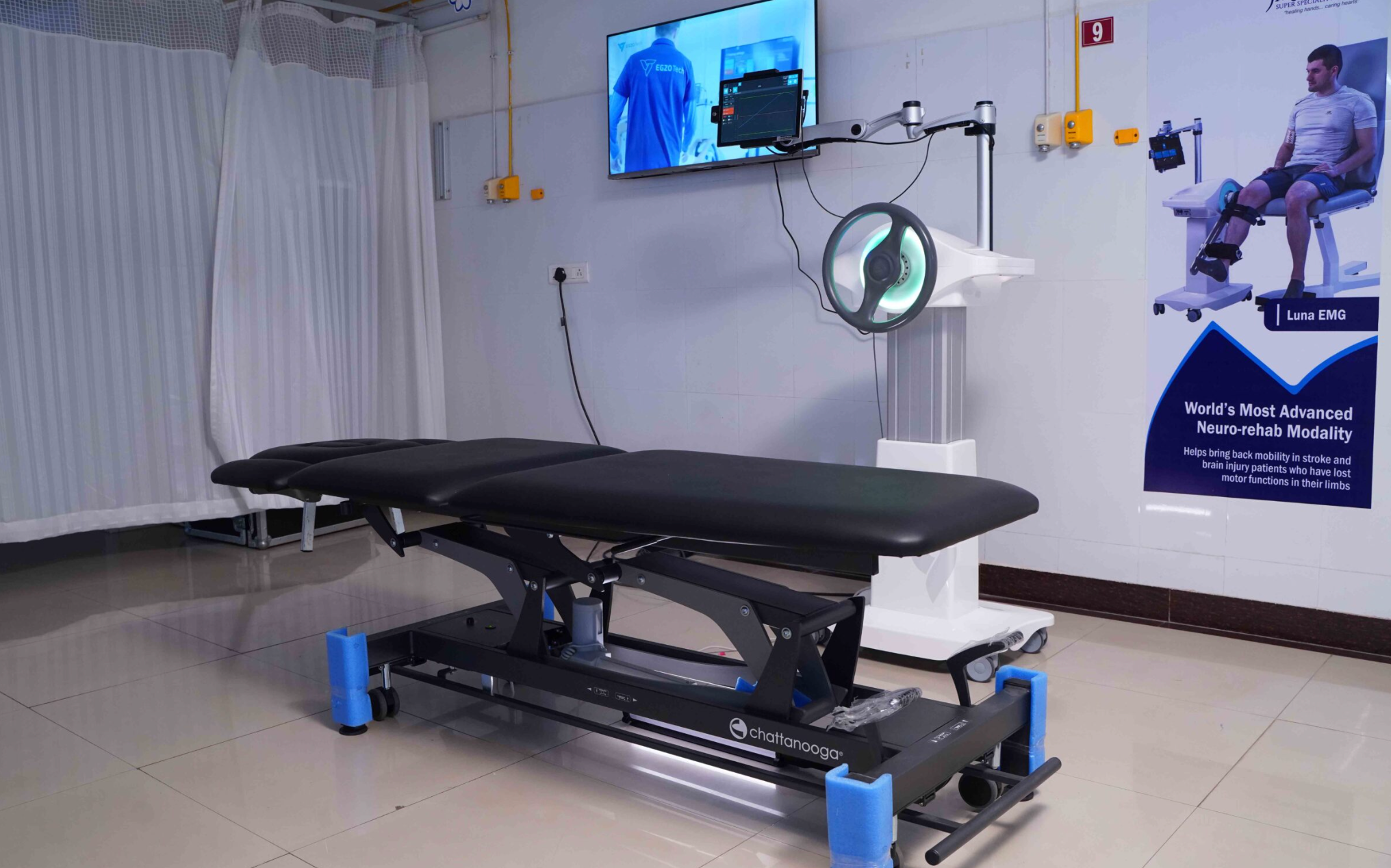
Robotic rehabilitation systems use sensors, motion tracking, and computer-guided technology to assist patients during exercises.
The system monitors movement patterns and helps patients perform controlled exercises safely and effectively.
Some advanced systems also provide:
- Real-time performance monitoring
- Customized exercise intensity
- Gait and balance training
- Interactive recovery programs
This combination of technology and physiotherapy improves patient engagement and treatment accuracy.
Benefits of Robotic Physiotherapy
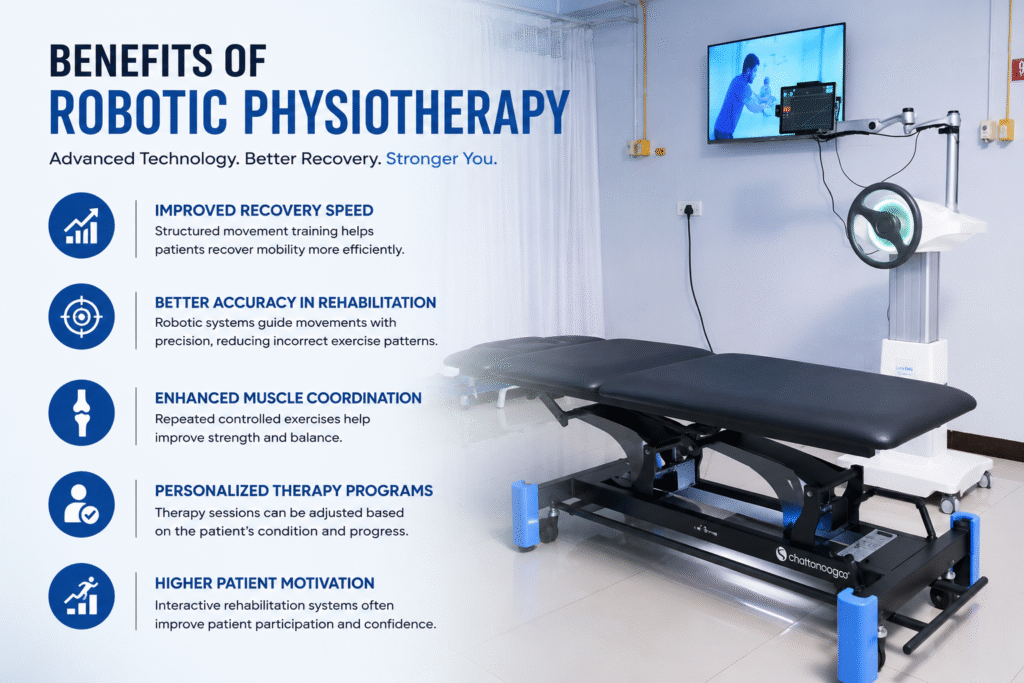
✅ Improved Recovery Speed
Structured movement training helps patients recover mobility more efficiently.
✅ Better Accuracy in Rehabilitation
Robotic systems guide movements with precision, reducing incorrect exercise patterns.
✅ Enhanced Muscle Coordination
Repeated controlled exercises help improve strength and balance.
✅ Personalized Therapy Programs
Therapy sessions can be adjusted based on the patient’s condition and progress.
✅ Higher Patient Motivation
Interactive rehabilitation systems often improve patient participation and confidence.
Robotic Physiotherapy After Knee Replacement
One of the most common uses of robotic physiotherapy for recovery is after joint replacement surgery.
Patients recovering from knee replacement often benefit from:
- Improved walking ability
- Better joint flexibility
- Faster muscle strengthening
- Reduced stiffness
This helps patients return to normal daily activities more comfortably.
Who Can Benefit from Robotic Rehabilitation?
Robotic physiotherapy may be suitable for:
- Elderly patients with mobility issues
- Post-surgical patients
- Stroke rehabilitation patients
- Athletes recovering from injuries
- Patients with neurological disorders
A physiotherapy specialist can determine the most suitable rehabilitation plan based on the patient’s condition.
The Future of Rehabilitation Technology
The integration of robotics and physiotherapy is transforming modern healthcare. As technology continues to advance, rehabilitation is becoming:
- More precise
- More patient-focused
- More effective for long-term recovery
The future of physiotherapy is expected to combine robotics, artificial intelligence, and real-time monitoring to deliver better rehabilitation outcomes.
Final Thoughts
Robotic physiotherapy is redefining recovery and rehabilitation by combining advanced technology with personalized patient care. From orthopedic recovery to neurological rehabilitation, robotic-assisted therapy offers improved accuracy, better mobility training, and enhanced recovery experiences.
For patients looking for advanced rehabilitation solutions, robotic physiotherapy represents the future of modern recovery care.
Table of Contents
- What is Knee Osteoarthritis?
- What is PRP for Knee Osteoarthritis?
- How PRP Helps in Knee Cartilage Damage
- Benefits of PRP for Knee Osteoarthritis
- PRP Procedure: Step-by-Step
- Recovery After PRP Injection
- Who is Eligible for PRP Injection?
- PRP Injection vs Conventional Treatments
- Is PRP Injection Safe?